Mostrando entradas con la etiqueta Science. Mostrar todas las entradas

sábado, 22 de marzo de 2014

HISTORY

Here is the video about Prehistory we saw in the Science class. I also add an interesting video about the cave of Altamira, where you can see amazing cave paintings. 
I hope you enjoyed it

Aquí está el vídeo sobre la Prehistoria que vimos en clase. También he incluido un vídeo muy interesante sobre la cueva de Altamira sonde podréis ver fascinantes pinturas rupestres.
Espero que lo disfrutéis.


domingo, 19 de enero de 2014

UNIT 1 - FOOD AND NUTRITION

Here are some interesting videos about the different systems that take part in nutrition. I also wrote the page of your Sicence book where you can find more information about them.


THE DIGESTIVE SYSTEM (more information on page 8)


THE URINARY SYSTEM (more information on page 9)


SWEAT GLANDS (also on page 9) 

jueves, 20 de junio de 2013

English fun


Para entreteneros y practicar inglés a la vez os recomendamos la web del Bristish Council LearnEnglish Kids. Tenéis canciones, cuentos, vídeos y además si entráis con el login mesetadeorcasitas y la contraseña meseta123 podéis acceder a montones de actividades.

Lecturas de science para el verano


Pinchando aquí podéis acceder al cuadernillo de lecturas de science de SM. Hay una pequeña lectura de cada unidad y algunos ejercicios sobre lo leído.

miércoles, 5 de junio de 2013

miércoles, 20 de febrero de 2013

Las fases de la luna

VER LA EVOLUCIÓN DE LA LUNA ESTE MES

Aquí tenéis un documento y un video para entender un poco mejor las fases de la luna.
Lo importante es saber que según la posición de la luna en su órbita alrededor de la tierra la vemos de distintas formas.


Las Fases de La Luna


domingo, 17 de febrero de 2013

Tamaño de planetas y estrellas


Diámetro Sol = 1.392.000 Kms
Diámetro Tierra = 12.756 Kms.
Diámetro Luna = 3.476 Kms.

Por consecuencia:

RELACION TIERRA-LUNA

- El diámetro de la Tierra es 3,7 veces mayor del diámetro de la Luna.
- El volumen de la Tierra es 50 veces mayor de el de la Luna
(la Luna entraría en la Tierra 50 veces!).

RELACION TIERRA-SOL

El diámetro de la Tierra es 109 veces menor del diámetro del Sol
El volumen de la Tierra es 1.300.000 veces menor del volumen del Sol.

DISTANCIAS:
La Luna se ve grande como el Sol 
por que es 400 veces mas chica en diámetro, pero está 400 veces más cerca.
De la Tierra a la Luna hay una distancia media de 384.400 km. La máxima distancia entre estos dos astros es de 406.700 km y la mínima es de 356.400 km.

De la Tierra al Sol hay una distancia máxima de 149. 597. 888 km y mínima de 149. 577. 000 km

The planet song


It's time to tour the planets that make up our solar system - come on!

The closest to the sun is the planet Mercury

Next the shrouded planet venus
Is as covered as can be

The Earth is next, we call it home
Let's hope it stays that way

And then there's Mars, it's really red
What more can I say?

The Gassy planet Jupiter's
As big as planets come

Then there's Saturn with its mighty rings,
Made up of tiny crumbs

We travel on to Neptune
That's a gassy-freezy ball

And cold and tiny Pluto
It's the furthest one of all

Well, there you go, that's our solar system
-You forgot Uranus
Goodnight everybody! 

miércoles, 13 de febrero de 2013

Our favourite mineral

Hemos estado viendo rocas y minerales en clase. Entre 72 minerales hemos elegido el que más nos gusta y en 3ºA y 3º B hemos conincidido: LA FLUORITA.
La fluorita puede tener diferentes colores (nosotros hemos visto una verde y otra violeta) es brillante, no muy dura y se rompe con facilidad. Se utiliza para hacer adornos y recibe el nombre del mineral más colorido del mundo.


Oceans and continents

Podéis comprobar si sabéis los océanos y los continentes con estos dos juegos.


lunes, 10 de diciembre de 2012

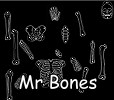
Para repasar los huesos


Os propongo estas actividades  para repasar  los hueso santes del exámen. Podréis acceder clickeando en cada imagen. (Ángel)
I propose to you these activities to go over the bones before the test. You can access by clicking on each image. (Angel)

domingo, 25 de noviembre de 2012

Bone song


Yakko: Everybody knows about the ankle bone connected to the
Other bones you have inside your leg.
Wakko: And everybody knows it's true,
Without the bones inside of you,
Dot : Your body would become a scrambled egg.

Yakko: So the toe bone's connected to the foot bone,
Wakko: And the foot bone's connected to the ankle bone,
Dot : And slide is connected to the trombone.

Yakko: The structure of the human body's
Something quite unique
And I'd imagine all the bones and joints
Connected to each other
In a complex distribution
Formed by years of evolution
That there still is some confusion
As to how it came to be.

Wakko: The foot and toes and ankle
Help us walk; we should be thankful
They're connected to the lower leg
Or else we'd all fall down
Right, here's the tibia, the shin bone
And the fibula is ingrown
To the back of the patella
Which is also called the knee.

YW+D : Knee knee knee knee knee knee knee,
Knee knee knee knee knee knee knee.
Knee knee knee knee knee knee knee,
Knee knee knee knee knee.

Dot : Here we classify bone as the
Femur or the thigh bone
It's connected to the pelvis
And the lower lumbar region
Up the sacrum to the vertebrae
And doctors all prefer to say
The sternum or the thorax
When they're talkin' 'bout your ribs.

Yakko: The finger bones are numerous
Wakko: The upper arm's the humerus
Dot : The forearm's got two pieces
Called the radius and ulna
Yakko: Then the scapula and clavicle
Wakko: The maxilla and mandible
Dot : The nasal and the frontal bone
And cranium on top. Mwah!

Yakko: The skeleton is really great
Wakko: It helps your body stand up straight
YW+D : Without it all your brains and guts
Would fall out on the floor!
 

viernes, 16 de noviembre de 2012

Unit 3. The senses


Aquí tenéis algunos enlaces de ayuda para estudiar esta unidad.
Resumen bilingüe
Primaria SM
Recursos online


miércoles, 3 de octubre de 2012

Science. Resumen bilingüe unit1.


Desde aquí podéis acceder y descargar las fichas resumen, en inglés y español, de todas las unidades del curso de Science.